
Silver peaked above $115 an ounce in late January and now trades in the high $50s. Anyone planning to Sell Silver after watching that run and waiting is now looking at roughly half the peak price and wondering whether the moment has passed.
The headline number hides the longer trend. Silver started 2025 under $30 an ounce and did not clear $50 until October, so the January spike came on top of a climb that had already been running for a year. Today’s price sits roughly where the metal stood last November, and it is more than double where it sat two years ago. Measured against the past decade rather than against a six-week peak, a sterling set or a coffee can of old coins is worth considerably more than it has been in a long time.
Where Silver Stands Now Compared to January
The pullback has real causes behind it. Conflict in the Middle East pushed oil prices up and strengthened the dollar, and expectations for Federal Reserve rate cuts kept sliding later into the year. Both work against a metal that pays no interest.
The gold-silver ratio tells the same story from another angle. That ratio, meaning how many ounces of silver it takes to buy one ounce of gold, fell into the mid-40s at the January peak, a low not seen in decades. It now sits closer to 70, which is nearer its long-run historical range. Silver gave back more ground than gold did during the correction, which is normal for a metal that swings harder in both directions.
For anyone searching silver price today and trying to decide, the honest framing is that you are selling into a market that corrected sharply from a speculative high and has not returned to its old baseline.
How Sterling and Coin Silver Are Priced Against Spot
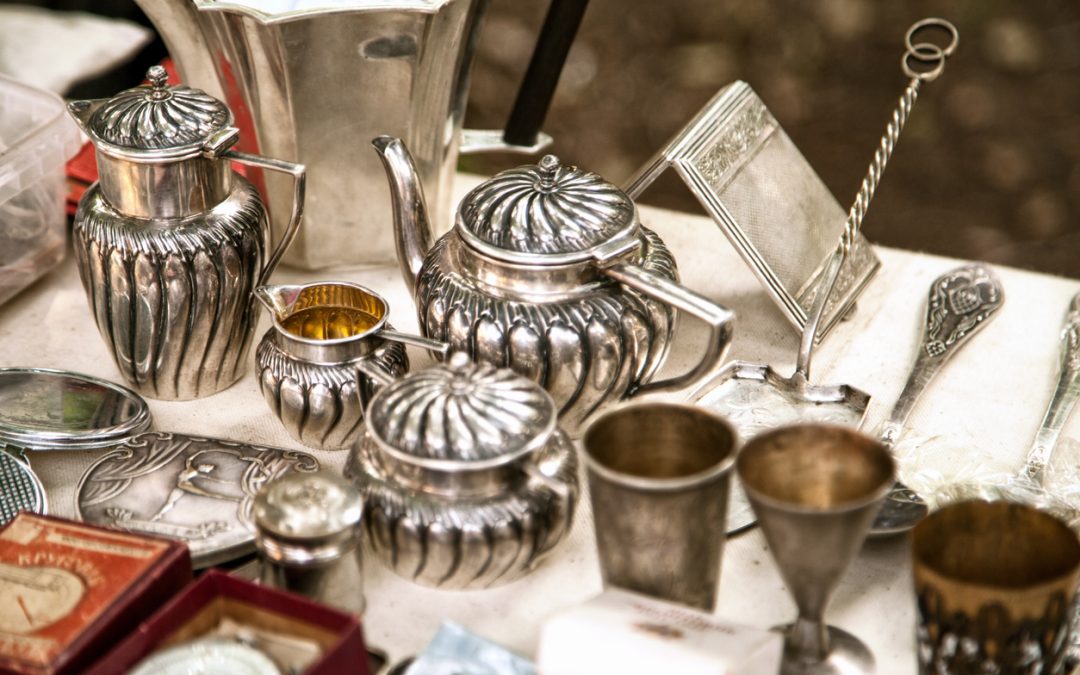
Household silver gets priced off the same spot market, adjusted for purity and weight. Sterling is 92.5 percent silver, which is what the 925 stamp means. A troy ounce is about 31.1 grams, so a sterling tray weighing 300 grams holds roughly 277 grams of fine silver, or just under nine troy ounces.
A few things reduce that math. Weighted candlesticks and some trophy bases are filled with cement or plaster, and knife handles usually hold a resin core, so only the silver shell counts. Silverplate holds a microscopic layer over base metal and carries no melt value at all. Marks like EPNS, silver on copper, or a brand name with no purity stamp usually point to plate.
Coins work on their own scale. United States dimes, quarters, and half dollars dated 1964 and earlier are 90 percent silver, which is why they trade as a bulk category. Bullion rounds and bars sit closest to spot, since their purity is stamped and standardized.
What Separates Melt Value From a Collector Premium
Melt value sets the floor. Some pieces sell above it, and knowing which ones is what keeps you from leaving money behind.
Complete flatware services by recognized makers in sought-after patterns can bring more than their weight. So can early American coin silver, hollowware with clean maker’s marks, and anything with genuine age and craftsmanship behind it. Certified or key-date coins carry a numismatic premium that has nothing to do with silver content and everything to do with rarity and grade.
Never clean or polish silver coins before an evaluation. Scrubbing strips the original surface that collectors pay for, and it can erase real value in a few seconds. Tarnished silver in original condition is fine. Staten Island sellers bringing in inherited pieces often arrive having polished everything to a shine, which helps on serving pieces and hurts on coins.
Reading the 2026 Forecasts Without Leaning Too Hard on Them
Analyst forecasts for silver this year run from about $42 to $165 an ounce, with the average landing somewhere near $80. That spread is the most useful information in the whole set of numbers. Professionals with full research desks disagree by a factor of four.
The bullish argument rests on repeated supply deficits and rising industrial demand from solar and electronics. The bearish argument points out that a large share of January’s spike looked speculative, and that a firm dollar with higher real yields caps the upside. Both cases are reasonable, and neither one tells you what next month brings.
What you can control is your own reason for selling silver. Silver sitting in a closet earns nothing while it waits. If the pieces have no sentimental hold on you and the cash has a use, the current market is far from a bad one by historical standards. If you can leave it alone indefinitely and want to see whether the deficit story plays out, waiting costs you only storage space.
Getting an Accurate Read Before You Decide
Weigh what you have at home first, even roughly, using a kitchen scale. Separate anything stamped sterling or 925 from anything unmarked, and keep coins apart from flatware and hollowware. Bring a government-issued photo ID, which is standard anywhere precious metals are bought.
Ask to see the weighing and testing happen in front of you, and ask which spot price the offer is based on. A buyer who walks you through purity, weight, and the current market rate is giving you something you can check against another offer the same afternoon.
If you want to know what your silver is worth in today’s market rather than January’s, bring it to Collectors Coin & Jewelry in Staten Island and have it weighed, tested, and sorted while you watch. There is no obligation to sell, and you will leave knowing which pieces are melt, which carry a premium, and what the whole lot brings right now.